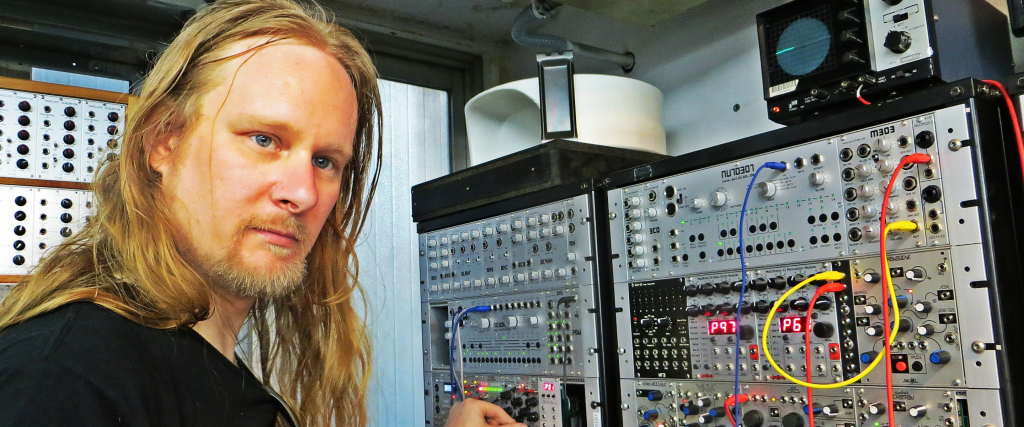
Within this blog post, I am going to look deeper into the breakcore artist Venetian Snares and how he has become a pioneer for breakcore, as well as how specifically his song Hanja off the Rossz album helped breakcore reach the masses after being trapped in the underground scene.
In the early 2000s, breakcore was emerging and forming its own underground scene from UK jungle, hardcore techno and glitch music. Venetian Snares’ 2005 album Rossz csillag alatt született was birthed in this scene, blending the genre’s chaotic breakbeats with classical and melodic influences he absorbed growing up in Hungary. He was surrounded by classical music within his culture and this is shown in every aspect of his album. As musicologist Andrew Whelan states, breakcore’s development was formed by its ‘extreme rhythmic fragmentation’ and its reliance on digital sampling, placing artists like Venetian Snares at the centre of a rapidly evolving, internet-driven experimental culture (Whelan, 2008).
Venetian Snares’ sonic identity is defined by his contrast of soft classical strings paired with violent and fragmented drum breaks to create a soundscape that sounds cinematic yet unstable at the same time. This contrast has been widely discussed by producers online, with YouTube breakdowns highlighting how the lush orchestral passages collide with extreme breakbeat manipulation to heighten the track’s emotional volatility (Adam Neely, 2019).
Venetian Snares is known for using the DAW Renoise as well as Eurorack drum machines to capture his signature drum sound. However, a major part of his music is sampling the Amen break and manipulating it until it becomes incredibly chaotic. After analysing his work further, I can point out the use of extreme micro-slicing, time-stretching and repeated resampling. All of these techniques allow him to twist the Amen into hyper-detailed rhythmic patterns that feel inhuman in their precision. This is such a contrast to the soft and angelic samples used for the main melody for a lot of his tracks, as they are orchestral pieces sliced together to add angelic or sometimes cinematic feelings across his whole album. This approach shows what Butler (2006) calls the ‘post-human rhythmic aesthetic’ in electronic music production, where digital sampling pushes breakbeats beyond the limits of human performance.
References
Butler, M. J. (2006) Unlocking the Groove: Rhythm, Meter, and Musical Design in Electronic Dance Music. Bloomington: Indiana University Press. Available at: https://archive.org/details/unlockinggroover00butl (Accessed 18th of November)
Neely, A. (2019) Why Venetian Snares Sounds Like That, YouTube video. Available at: https://www.youtube.com/watch?v=Z8Zp5oA5ILE (Accessed 18th of November)
Whelan, A. (2008) Breakcore: Identity and Interaction on Peer-to-Peer. Rotterdam: Erasmus University.https://www.academia.edu/1448815/Breakcore_Identity_and_Interaction_on_Peer_to_peer (Accessed 18th of November)
Leave a Reply