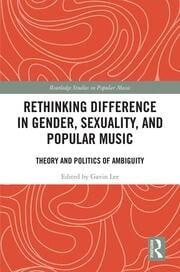
For week 9 I looked at the book ‘Rethinking reference in gender, sexuality and popular music’ and I’m going to summarise some of its key points.
Why ambiguity matters
Ambiguity works as a political strategy as it allows gender and sexuality to resist control without being fixed into a category that institutions can easily regulate. This gives people identity and structure for themselves and not for anyone else as it becomes a self expression. This is powerful as it removes the need for external approval and allows individuals to define who they are on their own terms.
Gender as a performance in music
Across the text, gender is shown to be something that is performed through voice, costume and gesture rather then something that is biologically fixed. This idea breaks the mold of gender having set rules and alignments as it can be more open and fluid. Within music and performance this can be the case as well. Looking deeper at the Drag scene this plays with the idea of gender in a performative way by exaggerating feminine or masculine aesthetics is almost a comical way for a performance. This is reinforced by the book as it shows how these exaggerated performances create ambiguity that challenges the audience into questioning what real gender actually means (Lee, 2016)
Female punk
Female punk bands like The Slits and The Raincoats used noise, aggression, and amateur performance to reject sexualisation and challenge both rock masculinity and traditional femininity. By refusing perfection, they disrupt the expectation of how women should sound and behave. Their use of messy vocals and uneven rhythm acts as a feminist resistance by preventing their music and bodies from being easily consumed by the male gaze. This is reflected in the book’s description of women’s punk performance as a deliberate rejection of polish, where their sound is framed as “untrained, awkward and confrontational,” turning amateurism itself into a political statement (Reddington, 2016).
Goth and the limits of transgression
Even though goth aesthetics appear sexually transgressive, the book talks about how they often show traditional power dynamics even while seeming to challenge it. Dominant and submissive imagery can look radical on the surface but they often show old ideas about male control and female passivity. The book says that this creates tension where participants may feel empowered through performance, yet still remain shaped by the same gender norms they try to resist. This shows that sexual transgression by itself does not automatically lead to political liberation.
References
Lee, S (2018)Rethinking difference in gender, sexuality, and popular music. Abingdon, Oxon ; Routledge
Leave a Reply