Blog

  • Week 10: Unit end

    This blogpost is a final reflection of this unit and how I developed skills throughout to help my practice of music production. 

    Within this unit I feel like I developed skills on critical listing, artist analysis and putting researched skills into practice the most. I developed my critical listening skills while listening to various artists and genres that I am unfamiliar with to help dissect their approaches to music production and then use that information in practice by creating pieces similar to that genre or artist. This skill has become really beneficial for me as I gain a deeper understanding of the technical skills these artists use and have already put the skills into practice so I can easily translate that into my own work and for artists I am more familiar with. 

    I also developed deeper skills in research analysis though finding academic articles and reviewing the information. This skill has become a crucial part of this unit as looking deeper into the artist’s background and interviews is an important part of understanding not only their sound, but also their intention and identity. Learning how to properly analyse research helped me to make more informed creative decisions, rather than relying purely on instinct. It also allowed me to support my ideas with evidence, which improved both my written work and my practical outcomes.

    Throughout the unit, I also improved my ability to reflect on my own work in an honest and critical way. By evaluating feedback from tutors and peers, I was able to identify both strengths and weaknesses in my productions. This helped me understand where I need to improve and what areas I  already perform well in.This has helped me become more self aware and has encouraged me to set clear goals for projects moving forward.

    This unit has had a positive impact on me as a music producer. It has given me technical skills as well as improved my research and critical listening skills. It has also made me feel more comfortable in experimenting creatively. I feel equipped to continue developing my sound and applying these skills to more projects.
  • Week 9: Book review

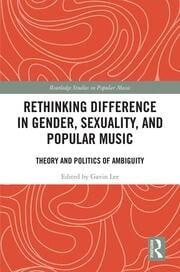
    For week 9 I looked at the book ‘Rethinking reference in gender, sexuality and popular music’ and I’m going to summarise some of its key points.

    Why ambiguity matters

    Ambiguity works as a political strategy as it allows gender and sexuality to resist control without being fixed into a category that institutions can easily regulate. This gives people identity and structure for themselves and not for anyone else as it becomes a self expression. This is powerful as it removes the need for external approval and allows individuals to define who they are on their own terms.

    Gender as a performance in music 

    Across the text, gender is shown to be something that is performed through voice, costume and gesture rather then something that is biologically fixed. This idea breaks the mold of gender having set rules and alignments as it can be more open and fluid. Within music and performance this can be the case as well. Looking deeper at the Drag scene this plays with the idea of gender in a performative way by exaggerating feminine or masculine aesthetics is almost a comical way for a performance. This is reinforced by the book as it shows how these exaggerated performances create ambiguity that challenges the audience into questioning what real gender actually means (Lee, 2016)

    Female punk

    Female punk bands like The Slits and The Raincoats used noise, aggression, and amateur performance to reject sexualisation and challenge both rock masculinity and traditional femininity. By refusing perfection, they disrupt the expectation of how women should sound and behave. Their use of messy vocals and uneven rhythm acts as a feminist resistance by preventing their music and bodies from being easily consumed by the male gaze. This is reflected in the book’s description of women’s punk performance as a deliberate rejection of polish, where their sound is framed as “untrained, awkward and confrontational,” turning amateurism itself into a political statement (Reddington, 2016).

    Goth and the limits of transgression

    Even though goth aesthetics appear sexually transgressive, the book talks about how they often show traditional power dynamics even while seeming to challenge it. Dominant and submissive imagery can look radical on the surface but they often show old ideas about male control and female passivity. The book says that this creates tension where participants may feel empowered through performance, yet still remain shaped by the same gender norms they try to resist. This shows that sexual transgression by itself does not automatically lead to political liberation.

    References 

    Lee, S (2018)Rethinking difference in gender, sexuality, and popular music.  Abingdon, Oxon ; Routledge

  • Week 8: Making an Breakcore track

    Within this weeks session, we looked at creating a break beat in the style of a particular artist. I chose the artist I was already researching Veniterian Snare as his style has a lot of orchestral elements that I really enjoy. I also experimented briefly with Ableton’s Max for Live devices, especially for adding light glitching and extra modulation, as these tools are commonly used in breakcore to create unpredictable textures

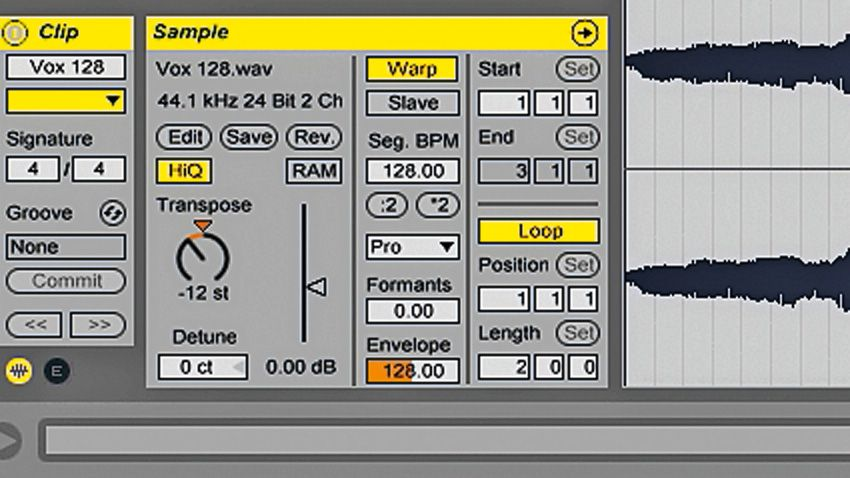
    From researching Venetian Snares’ workflow, I learned that he often slices drum breaks and resamples them repeatedly in Renoise, so I tried to imitate this by heavily cutting individual drum hits in my own track. I started the track by finding the Amen break sample that is popular within the breakcore genre.Then used an abletons sampler to slice up different elements of the sample so I can then use midi to draw out the individual drum hits. Mapping out the drum hits as midi is a very lengthy process as I want to give the tone of chaos using only the amen break so adding many different elements drawn out as midi takes a lot of planning and layering. Once the drum pattern was complete I started to use ableton’s inbuilt effects to help add even more variety to the track. Pitch shifting was an effect I used frequently on the drums to manipulate the snare to add even more chaos and variety to the drums by using automation. 

    For the orchestral samples within the song I looked through different sample forums as in the past they have been the best places to find sampled sounds and royalty free samples. I came across a moody string sample created by a member of the forum to use as a sample. I then chopped up different chord structures and time stretched them as well as used aggressive repeats to add some fast paced chaos to a very angelic sample. Working in a group helped me refine these ideas, as we shared approaches for slicing breaks and discussed ways to create more chaotic energy through automation.

    This sonic aesthetic is a massive contrast of the two main elements to create a really unique sound that gives the music of  Veniterian Snare a really strong identity. I also feel like this workflow is something new to me but I have learned a lot about sample manipulation as I have not worked with a lot of sampling before. It can be really beneficial as a producer as creating something new from a sample by manipulation can spark new ideas from simple samples to create a new sound and identity. These skills can be used more broadly into any genre of music as it is a really great way of adding colour and ideas to a track through sample manipulation. The most challenging part was keeping the chaos controlled, but this experimentation helped me understand breakcore’s balance between unpredictability and structure.

    References

    Butler, M. (2006) Unlocking the Groove: Rhythm, Meter, and Musical Design in Electronic Dance Music. Bloomington: Indiana University Press. Available at:https://books.google.co.uk/books/about/Unlocking_the_Groove.html?id=opzZzFUgDfEC&redir_esc=y (Accessed: 3rd of December)

    Ferrigno, E. (2009) ‘Breakcore: Identity and Interaction on Peer-to-Peer (Whelan),’ Dancecult, 1(1), pp. 152–154. Available at: https://doi.org/10.12801/1947-5403.2009.01.01.15. (Accessed: 3rd of December)

    ꧁Masquerade Angel꧂ (2025) Moody Strings Sample (Free). Available at: https://www.youtube.com/watch?v=bkvanPwGOHQ. (Accessed: 3rd of December)

  • WEEK 7: Breakcore

    Within this blog post, I am going to look deeper into the breakcore artist Venetian Snares and how he has become a pioneer for breakcore, as well as how specifically his song Hanja off the Rossz album helped breakcore reach the masses after being trapped in the underground scene.

    In the early 2000s, breakcore was emerging and forming its own underground scene from UK jungle, hardcore techno and glitch music. Venetian Snares’ 2005 album Rossz csillag alatt született was birthed in this scene, blending the genre’s chaotic breakbeats with classical and melodic influences he absorbed growing up in Hungary. He was surrounded by classical music within his culture and this is shown in every aspect of his album. As musicologist Andrew Whelan states, breakcore’s development was formed by its ‘extreme rhythmic fragmentation’ and its reliance on digital sampling, placing artists like Venetian Snares at the centre of a rapidly evolving, internet-driven experimental culture (Whelan, 2008).

    Venetian Snares’ sonic identity is defined by his contrast of soft classical strings paired with violent and fragmented drum breaks to create a soundscape that sounds cinematic yet unstable at the same time. This contrast has been widely discussed by producers online, with YouTube breakdowns highlighting how the lush orchestral passages collide with extreme breakbeat manipulation to heighten the track’s emotional volatility (Adam Neely, 2019).

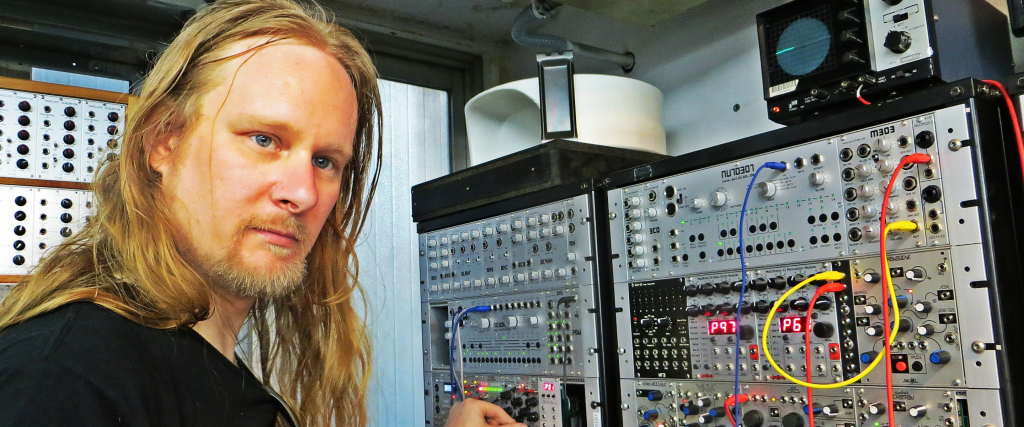
    Venetian Snares is known for using the DAW Renoise as well as Eurorack drum machines to capture his signature drum sound. However, a major part of his music is sampling the Amen break and manipulating it until it becomes incredibly chaotic. After analysing his work further, I can point out the use of extreme micro-slicing, time-stretching and repeated resampling. All of these techniques allow him to twist the Amen into hyper-detailed rhythmic patterns that feel inhuman in their precision. This is such a contrast to the soft and angelic samples used for the main melody for a lot of his tracks, as they are orchestral pieces sliced together to add angelic or sometimes cinematic feelings across his whole album. This approach shows what Butler (2006) calls the ‘post-human rhythmic aesthetic’ in electronic music production, where digital sampling pushes breakbeats beyond the limits of human performance.

    References

    Butler, M. J. (2006) Unlocking the Groove: Rhythm, Meter, and Musical Design in Electronic Dance Music. Bloomington: Indiana University Press. Available at: https://archive.org/details/unlockinggroover00butl (Accessed 18th of November)

    Neely, A. (2019) Why Venetian Snares Sounds Like That, YouTube video. Available at: https://www.youtube.com/watch?v=Z8Zp5oA5ILE  (Accessed 18th of November)

    Whelan, A. (2008) Breakcore: Identity and Interaction on Peer-to-Peer. Rotterdam: Erasmus University.https://www.academia.edu/1448815/Breakcore_Identity_and_Interaction_on_Peer_to_peer (Accessed 18th of November)

  • Week 6: Burial

    Within week 6, our group looked at the producer and artist Burial. Within this week, we looked more closely at Burial’s synthesis and sampling, specifically on the album Untrue. After critical listening through the entire album, I can pick 5 key points used in his production, specifically in his synthesis and sampling.

    Vocal manipulation
    Burial uses vocal manipulation as a staple in many of his songs to add texture rather than lead vocals that sing a harmony. He takes vocal samples from old R&B tracks and manipulates them into these ghostly, genderless fragments that are spread across his whole album to add an eerie texture by using pitch shifters and formant shifters, as well as long, boomy reverb .This way of transforming existing vocals into emotional fragments is something discussed in academic analysis of his sampling techniques (Maclaurin & Callander, 2025).

    Environmental samples
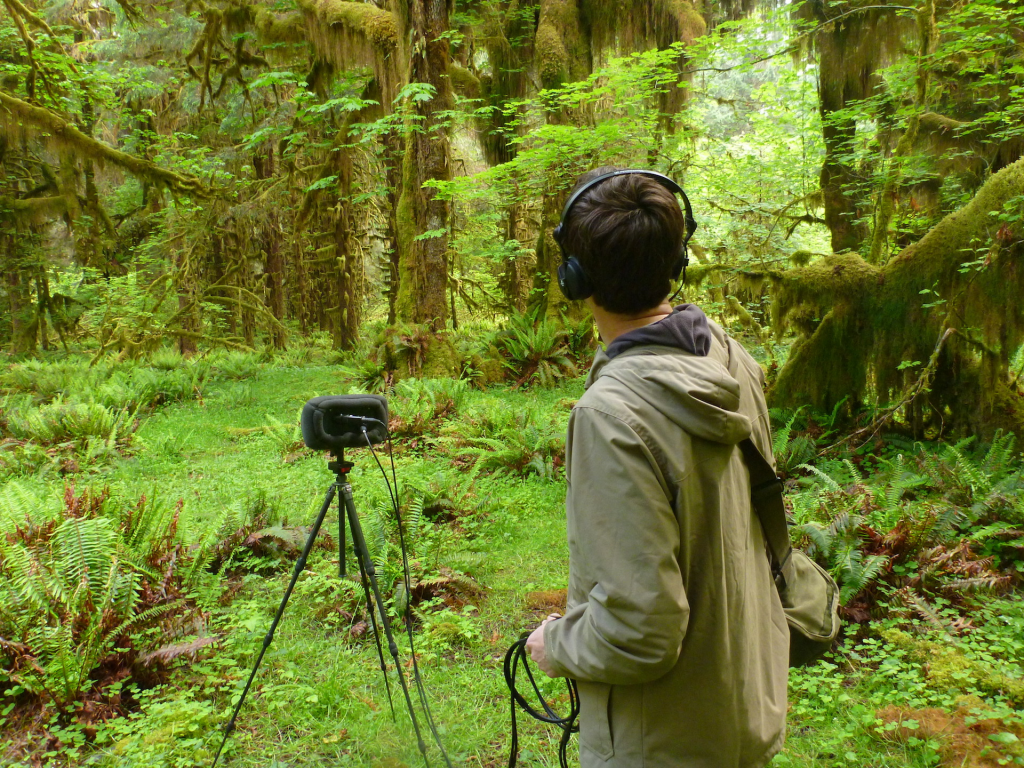
    Instead of using normal synth pads, he builds the whole atmosphere out of everyday sounds like rain, street noise, and vinyl crackle, which makes the music feel like it’s happening in some real, late-night space. This adds so much depth to many of his tracks as it makes the listener imagine the space they are in as it’s playing out. This approach of using environmental noise as a core part of a track is linked to ideas within experimental electronic music (Demers, 2010). He uses this in combination with effects such as reverb to give depth to the samples, or sometimes uses a lack of reverb to add dry samples that sound like they are being whispered in your ear.

    Non-quantised drums
    His drum samples are chopped and placed off-grid on purpose so they feel slightly messy and humanized. This adds so much character to the drums as they feel less robotic, and combined with the environmental samples, they sound like someone tapping away in the room with you. It gives the track this really intimate, almost handmade feel that you don’t normally get in electronic music, so it’s a massive contrast to the very plain drums normally found within his genre.

    Texture and noise
    Burial doesn’t hide imperfections within his tracks as he leans into the noise and rough textures to give his music this worn-out feeling. Instead of trying to polish everything, he actually brings the noise forward in the mix so it becomes part of the emotion. It almost feels like you’re listening through an old radio. The texture makes the songs feel alive and breathing. Many fans mention this as one of the most important features of ‘Untrue’ especially in video essays examining the album (Trash Theory, 2017) It also adds a weird comfort, as the roughness feels honest and human.

    Simple synths
    A lot of his bass and synth sounds are just basic waveforms that he dirties up with filters and noise, which somehow makes them feel way more emotional than clean, polished sounds. There’s this really human quality to it, like he’s proving you don’t need some massive, cinematic sound design to hit people in the chest. It’s the grit that makes it feel alive. Those slightly detuned, warbly chords feel like they’re breathing, like they’re carrying some kind of unspoken sadness. And because everything is so stripped back, every tiny movement stands out; you hear the soul in the cracks instead of getting distracted by the shine.

    References

    Demers, J., 2010. Listening through the Noise: The Aesthetics of Experimental Electronic Music. Oxford: Oxford University Press. Available at: https://academic.oup.com/book/27260?utm (accessed November 9th)

    Maclaurin, A. & Callander, M., 2025. ‘“Like Embers in the Tune”: an examination of Burial’s sample reuse’, Chroma: Journal of the Australasian Computer Music Association, 40, pp. 1–17. (accessed November 9th)

    Trash Theory, 2017. Burial’s Untrue: The Making of a Masterpiece. YouTube video. Available at: https://www.youtube.com/watch?v=Et5B-zfAIIo (accessed November 9th)

  • Week 5: Making a Moor Mother Inspired track

    For this week we paired up to create a track inspired by the work of Moor Mother. I worked with Ollie on this project and I’m going to reflect on how we created the track.
    For the start of this project we both did some critical listening of the track Deadbeat Protest off the album Fetish Bones and picked out three to five key skills she uses within production. This critical listening exercise can really be beneficial as a producer as you can take notes of consistent production techniques and key skills this artist uses, especially if you are trying to create a track inspired by them. A key skill that is a staple for this genre of music is using an anchor point. This is a consistent element that repeats throughout the whole track to give the listener something to focus on while other elements fade in and out. Our anchor point for this track was a very simple drum track that sits over the mix and guides the listener through the song. We used drum samples from various old drum machines found using the Decent Sampler library.

    Another key skill that is spread across this whole album was sampling. Using vocal samples from media across the internet and chopping them up in musical ways in time with the beat is a very prominent part of a lot of music within this genre .This idea of sampling as a political and creative tool is also discussed by Franklin (2021), who explains how reusing and reshaping sounds can create completely new meanings. We found a sample of Björk during an interview where she speaks about dissecting a TV.

    We then chopped some of the interesting lines and spread them across the whole track, then manipulated them with pitch effects and delay, as well as at times using automated distortion. We really explored more obscure avenues to manipulate and change the sound of the original sample to dirty it up and make it sound a lot different from the original, as well as to emphasise words we want the listener to focus more on. I believe this way of producing is really beneficial for a producer and can provide a lot of inspiration when looking for samples, as you can create something new from a pre-existing sound. It gives the song its own identity and character that is unique through experimentation. (Street,2012)

    References

    Franklin, M.I., 2021. Sampling Politics: Music and the Geocultural. Oxford: Oxford University Press. Available at : https://academic.oup.com/book/39843?utm_source (Accessed 1st of November)

     Moor Mother on Sampling, Afrofuturism and Collaboration | Red Bull Music Academy. Available at: https://www.youtube.com/watch?v=VPWi2wJELh4 (Accessed 1st of November)

    Street, J., 2012. Music and Politics. Cambridge: Polity Press. Available at: https://etheses.bham.ac.uk/id/eprint/6214/1/CarrascoGarcia15PhD.pdf?utm (Accessed 1st of November)

  • Week 4: Moor Mother

    Within week 4 we looked at the artist Moor Mother, and I decided to analyse the track Deadbeat Protest further.

    From a technical view, this track has a very aggressive tone. There are very few elements within the track, but every single one seems to be distorted and blown out to give the song an abrasive feel. The main instrument is an atonal, overpowering low-frequency bass that dominates the mix. The low end sits heavily throughout the track and creates a bit-crushed and intense foundation that the other elements either poke through or hide behind. There are also basic tonal drums that keep a simple beat at the start and act as the main anchor throughout the song. The drums sound like old drum-machine samples that are grainy and pushed through an aggressive compressor — a technique that Moor Mother has discussed in interviews regarding her sonic library and DIY approach to harsh sound. All of these extreme production choices give the track a harsh tonal quality that ties into its political message.

    The song expresses a strong political stance focusing on classism, racism, and the realities of homelessness. Looking deeper into the lyrics:

    “I’m in line, I’m in line, I’m in line
    At the soup kitchen…
    Got some bread, cheese, and some bottled milk…”

    the track talks about food insecurity and hardship. Homelessness remains a major issue in a lot of regions of the US, and Moor Mother has spoken about witnessing the rise of poverty and homelessness in her own community, which shows her artistic activism. The line “You ain’t shit” shows that no person is inherently better than another.

    The chorus “You can see my dead body at the protest” emphasises the focus on protest as a site of struggle. This suggests that peaceful protest alone may not be enough to create social change and that the stakes of political resistance can be life threatening. This merging of harsh sound with radical messaging puts Moor Mother’s work within the framework of the Black Radical Tradition.

    References

    Woods, P.J. (2020) Exploring the Learning Ecologies of Experimental Music. University of Wisconsin, Madison. Available at: https://asset.library.wisc.edu/1711.dl/3DQR7GPRADCZ28N/R/file-65a14.pdf (Accessed: 11 December 2025).

    Thomas, D.C. (2005) ‘Black studies and the scholarship of Cedric Robinson’, Race & Class, 47(3), pp. 1–20. Available at: https://journals.sagepub.com/doi/10.1177/0306396805058077 (Accessed: 11 December 2025).

    Ingleton, H. (2015) Feminist Process in Sound Arts and Experimental Musics. Available at: https://openaccess.city.ac.uk/id/eprint/17510/1/Ingleton%2C%20Holly%20%28redacted%29.pdf (Accessed: 11 December 2025).

  • Week 3: Queer beats

    Within week 3 we were set the task to create a piece inspired by queer and industrial music.

    My piece is a guitar driven track with a lot of distortion/saturation to add harsh grit and reverb to give it space. Throughout the track I have a repeating drum pattern created using samples of a Roland CR-68 played though the decent sampler plug-in. I fee like this adds a lot of character to the tone of the drums as this old drum machine has a lot of grit and warmth as it is real samples recorded from the real machine. This acts as an anchor point throughout the song to keep it moving and almost feels like steps pacing along with momentum. This anchor system is very common in a lot of industrial and experimental music as it keeps everything consistent and just on the edge of total chaos as all the other elements dance around this anchor. This is described well by the YouTube channel
    “Broken English Prod” when discussing production techniques for the artist Arca.

    throughout this track I also use automation to change the characteristics of many of the sounds. The drums in this track are a main focus so as the track progresses, I push a tube saturator plug-in harder and harder on the drum track until it starts to blow out and sound harsh and fully distorted. I also used compression in unusual and creative ways to challenge my views on how to typically use compression in a mix.

    I added a blown out compressor on the reverb aux of the track and side chained it to trigger on the kick drum. All of the tracks were sent though the reverb aux to give the whole song a sense of space but the reverb ducks and distorts when the kick drum triggers the compressor that then affects the rest of the track to really push the kick drum to the front of the mix as it’s the main anchor within the song.

    ultimately I think this style of production can really benefit a lot of producers as even if you are not creating a more experimental track, thinking this way can really help you break out of thinking in the box to help solve problems in the mix or even to create new sounds. Experimentation is so important for music production as every aspect is a very creative process so finding new ways to reach a goal or to find something new in itself is very creative and explorative

    References:

    Broken English Prod (2023) What makes Arca’s production so unique?  Available at: https://www.youtube.com/watch?v=F7tA7AiIppI. [accessed 23rd October 2025]

    Christian HensonPianobook. Available at: https://www.pianobook.co.uk/packs/posh-drum-machine/.[accessed 23rd October 2025]

    Tau, M (2022) Extreme music. Feral House (Page 34)

    Weekhout, H (2019)Music production: learn how to record, mix, and master music. New York : Routledge (Page 139)

  • Week 2: Arca

    Within week two we looked at an artist called Arca and the song Non-binary. I was looking specifically about the production techniques used in this song as there is a lot to unpack.

    Throughout the song I can hear the use of granular synthesis. This is often used to create harsh and dirty soundscapes that can really fill a mix and add emphasis in unique ways. This is very popular technique with experimental artists as you can use samples or field recordings to crate totally unique and abstract sounds as described by Native instruments in a blog post titled ‘Granular synthesis: a beginner’s guide’ (Native Instruments, 2023)

    Another reoccurring technique is within this track is using samples in very rhythmic ways. specifically using gun shots and bullet casing sounds within this song to use as almost an anchor point for the rest of the song. This anchor is very common across much of Arca’s work as many parts change and flow into new sections of the song, these samples stay consistent and play throughout( Broken English Prod, 2023). They also give the song a very metallic tone found in a lot of industrial music that adds harsh high end that cuts through the mix.

    For their vocal work, It feels very raw and sounds Like just one vocal take for most of the track as It really adds emphasis for every word and makes the listener lean in and hear ever word clearly. For most of the track it feels very lightly possessed and lets raw emotion shine though most of the track. However, later in the track they start to pitch and formant shift their vocals up and down on emphasised words to add a level of intrigue to their raw vocals and interest for the listener as there was a lot of breathing room for the raw vocals initially then as these pitched vocal chops came in, they filled up the sonic space more to really push the song.

    Overall I think that many unique and rarely used production techniques were laced within this song. This is a new genre I have barley explored and I am willing and open to look further into experimental music to discover more.

    References:

    Beat Spot (2024) Best ways to pitch vocals in Ableton Live. Available at: https://www.youtube.com/watch?v=sKgeCI6gHEQ.

    Broken English Prod (2023) What makes Arca’s production so unique? Available at: https://www.youtube.com/watch?v=F7tA7AiIppI.[Accessed October 20th, 2025]

    Native Instruments (2023) Granular synthesis: a beginner’s guide | Native Instruments Blog. Available at: https://blog.native-instruments.com/granular-synthesis [Accessed October 20th, 2025]

  • Week 1: Me as a Producer

    AreaSelf-rating (1–5)Comments / Examples
    Digital Audio Workstations (DAWs)  Ableton, Logic, etc. 4 Confident in most DAWs apart from protools as not had a lot of experience working with in within a studio with outboard gear
    Recording Techniques  microphones, gain staging, audio setup 4 very confident with recording techniques and even doing weird and experimental techniques when recording physical instruments
    MIDI Sequencing & Programming 3 Used a lot of virtual instruments and comfortable using MIDI programming but feel like there is more I could learn and get confident with
    Sampling & Synthesis 3 Know the basics of hardware and virtual synths as well as basic sampling but there is a lot more I can dive into to understand but have not yet
    Mixing & Effects Processing 4 Mixed many songs myself for professional release and confident in mixing a song effectively but still have much to learn and get more confident with
    Sound Design & Creative Processing 2 Have not done a lot of sound design both within music and for other media forms
    Critical Listening & Analysis 4reduction Confident I can pick out individual techniques within a lot of music but can always train my ears to be better
    Collaboration & Communication 2 Mostly work on my own during a production session so I am not used to working with others but would really love to improve my skills with this
    Organisation & Workflow 2 Very messy workflow at times but mess works for me the most but then this also disrupts being able to work with others

    Me as a Producer 🙂

    As a producer I am narrow and want to explore more music avenues. I mainly focus on indie/acoustic music as that is the style I create as an artist so have a lot of experience recording acoustic instruments with cheap and cheerful equipment or even using equipment I have made myself as I love that sound. I have taught myself or used online tools such as YouTube to learn how to hand make many parts of equipment I use such as my own guitar amp as well as weird noise makers and instruments.

    I love sloppy recordings that feel so human and have so much character. Though being a bedroom producer I have gained many skills in doing very ‘in the box’ techniques but have ventured out to try to rely less on a computer. I’m aiming towards being a more hybrid producer as I use the convenience of a computer and a DAW but want to run almost all my signal out of a computer to analogue gear I have made then re-recording it back in to my DAW.

    I take a lot of inspiration from artists such as Mac Demarco and Alex G who both also produce most of their work themselves in their own home studios with cheap and vintage gear.

    I also have a deep love for the producer Sylvia massy as he has a focus on strange recording techniques and making her own gear to use in a studio setting. She documents many of her techniques on her YouTube channel and that has become very inspiring for me as a young producer. One example I love is THIS YouTube video (Mix with the Masters, 2021) about sending a guitar speaker signal though a pickle to create a massive fuzz sound. This is such a strange and unique way to create this tone but it actually gave the guitar so much character that fit so well within the rest of the song. Many of these techniques are not just for fun stories but actually work to create amazing sounds that are unique for that song.

    References:

    LAURI’S DIY CHANNEL TV (2025) A better phantom powered condenser mic for ~15$. Available at: https://www.youtube.com/watch?v=83V19WYW_yw. [Accessed October 20th, 2025]

    Mac DeMarco (2025) Mac DeMarco – Holy. Available athttps://www.youtube.com/watch?v=8UsYLb3O8fI.[Accessed October 20th, 2025]

    Mix with the Masters (2021) Recording guitar through a pickle with Sylvia Massy. Available at https://www.youtube.com/watch?v=FpEJXHvaqJ0.